Eastern mountains
Fujairah is a documented source of Sidr honey, with samples reported from Dibba, Al Farfar and Tuwiyain.

UAE Sidr honey is associated with mountain and wadi landscapes, especially in the northeast. Reported areas include Fujairah, Ras Al Khaimah, Hatta and Al Ain.
Explore the regions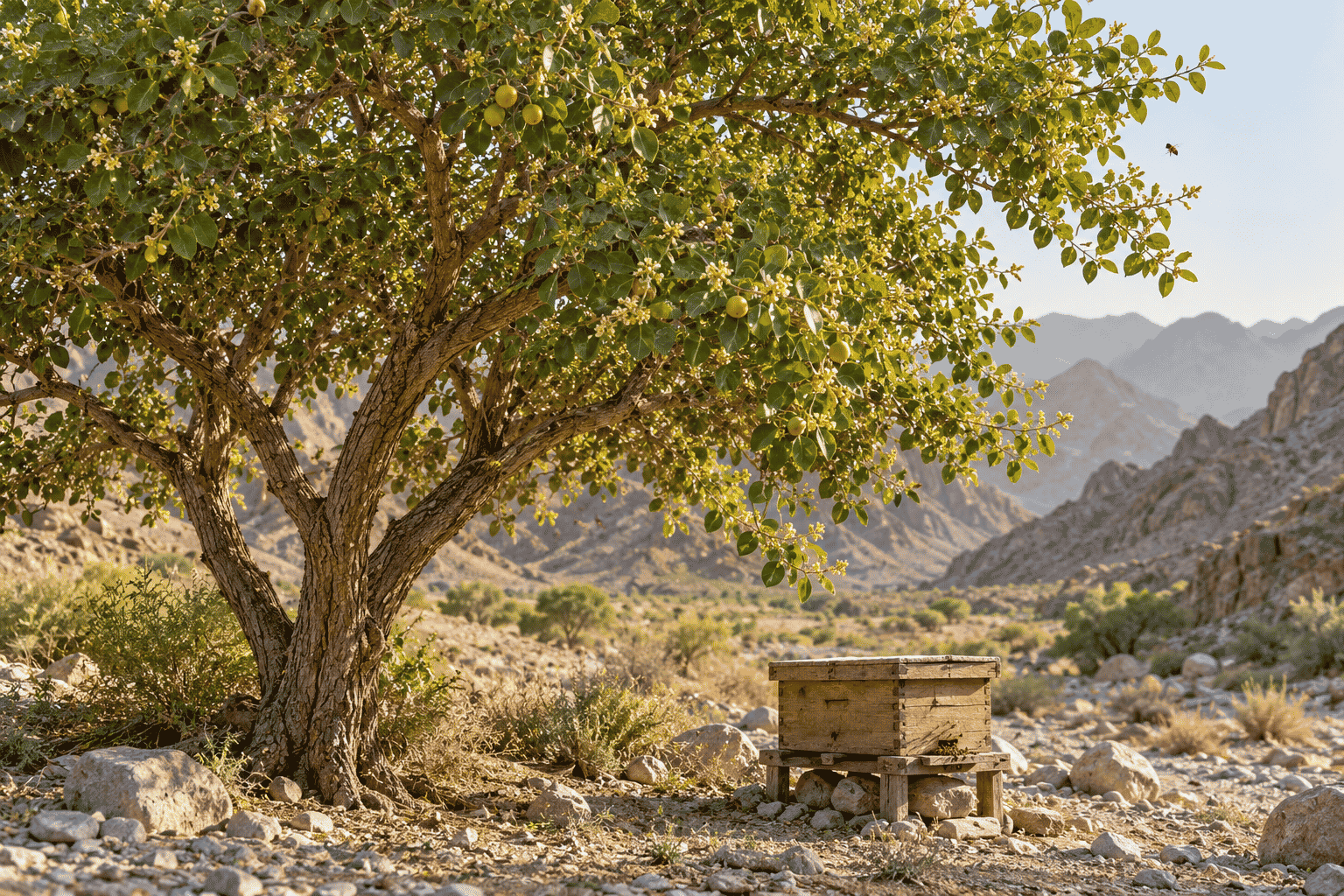
Sidr honey is produced when bees forage on Sidr blossoms. The exact harvest depends on the tree’s flowering, weather and the hive’s location. These locations are reported honey areas; a jar’s actual origin should be confirmed with its seller or beekeeper.
Fujairah is a documented source of Sidr honey, with samples reported from Dibba, Al Farfar and Tuwiyain.
Beekeepers report Sidr harvests later in the year among the emirate’s mountain honey seasons.
Hatta is named in reporting on UAE mountain honey and its traditional beekeeping areas.
Al Ain is also mentioned among areas associated with UAE mountain honey and bee colonies.
Regional context: Sidr trees and honey seasons extend across the UAE’s northern and northeastern hills, plains and wadis. This does not mean every shop in those areas sells locally harvested Sidr honey. Ask for the harvest location and season.
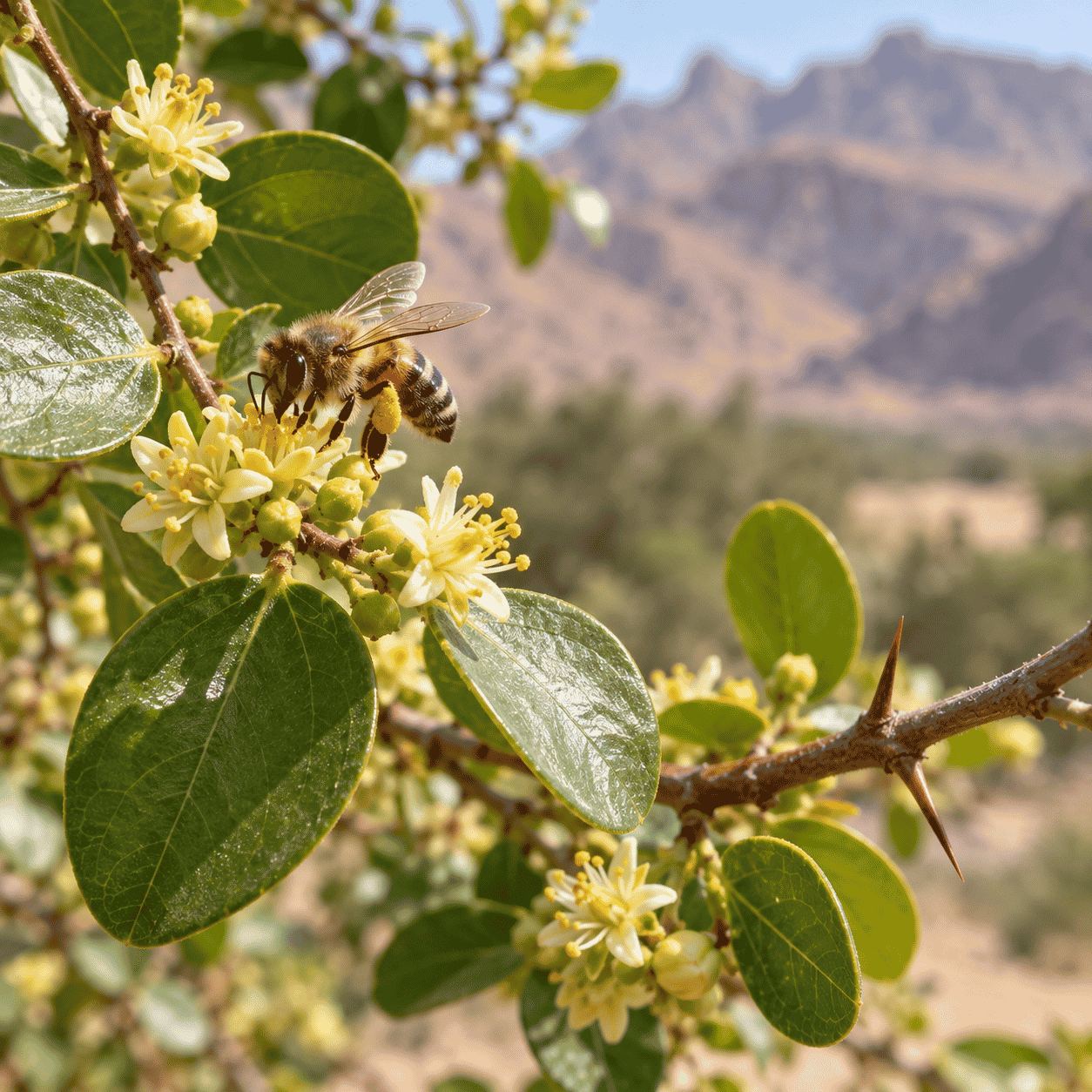
Sidr is commonly associated with the jujube tree (Ziziphus species). The UAE’s Sidr honey season is generally reported from early autumn into November, though local flowering can shift with weather and rainfall.
Bees collect nectar from Sidr flowers, and beekeepers time the harvest to the bloom and mature honeycomb. Nearby flowers and hive management can influence the final jar.
Illustrative AI-generated image; it is not a photograph of a named apiary.
Both are valued native forage trees, but they produce distinct honey seasons. The Samar image below is included as requested and is clearly labeled as a comparison, not a Sidr source.
Often harvested around October–November, following Sidr flowering.
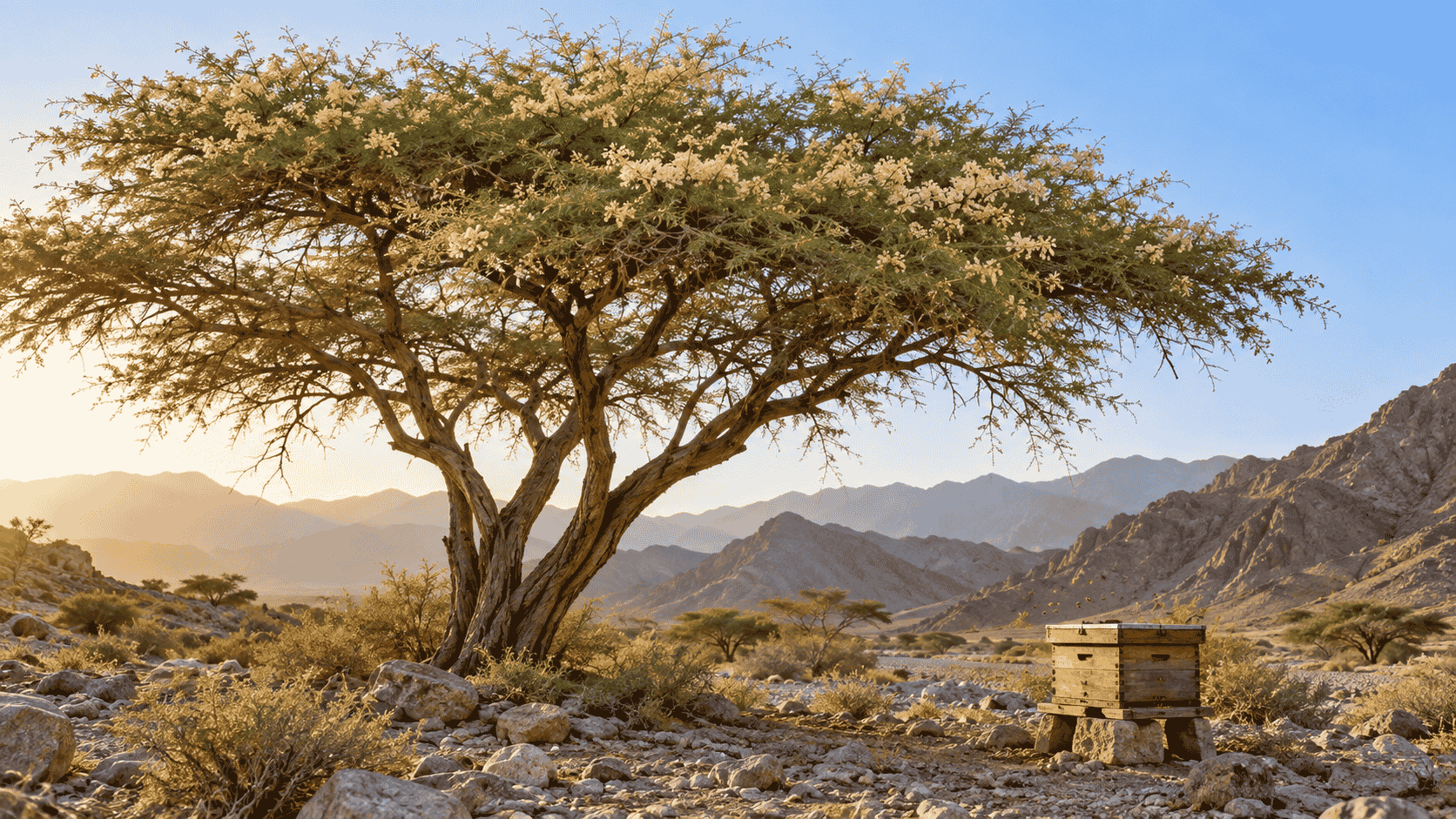
Samar honey comes from Samar blossoms and is usually a spring to early-summer harvest. This image illustrates Samar, not Sidr.
Local trees flower, typically in the cooler part of the year.
Bees gather nectar and return it to the hive, where it ripens into honey.
Beekeepers check the honeycomb and harvest when the honey is mature.
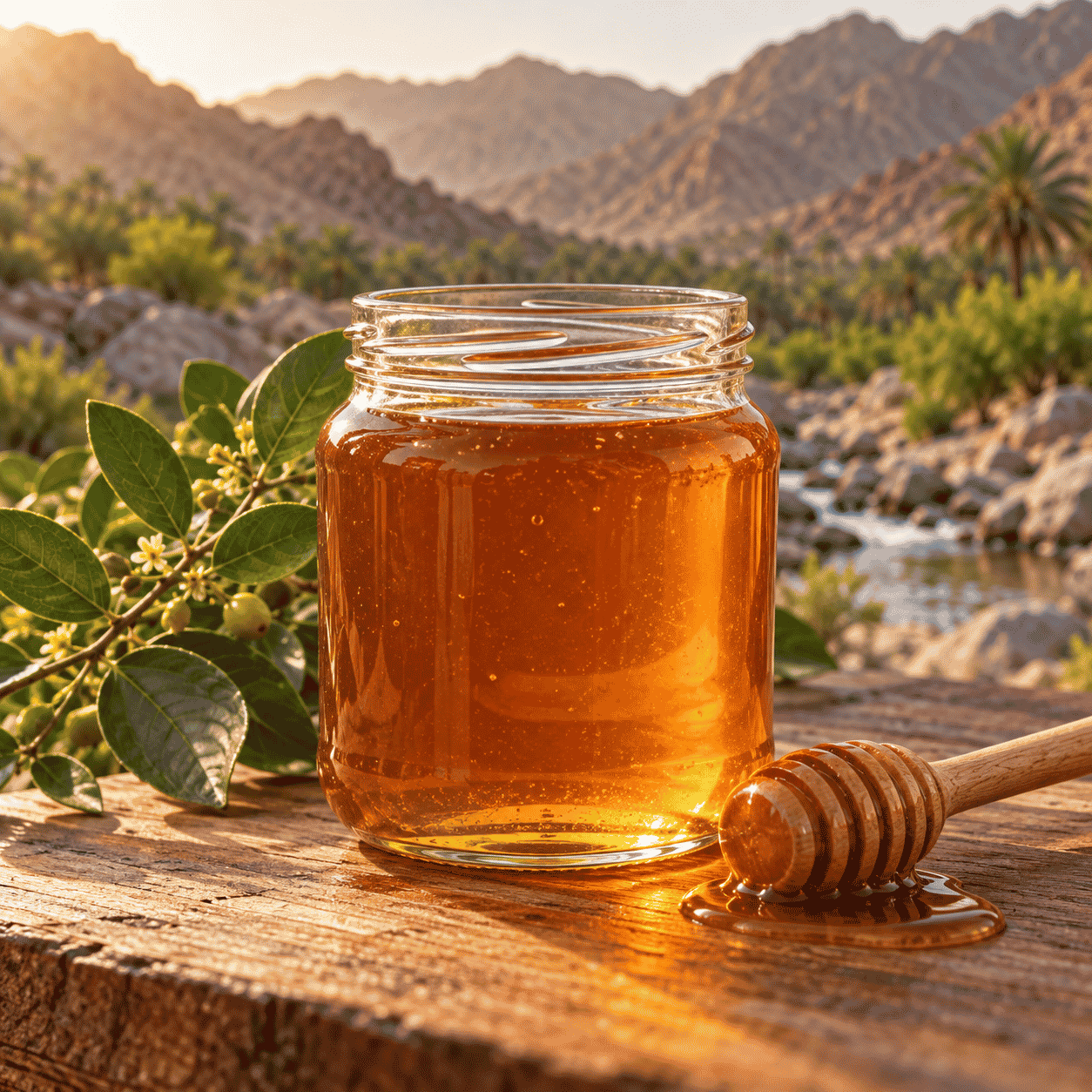
Ask the seller which emirate or apiary the honey came from, the harvest year and season, and whether the jar is single-floral Sidr honey or a blend. Color and texture vary naturally, so appearance alone cannot verify a honey’s source.
Reported areas include Fujairah, Ras Al Khaimah, Hatta in Dubai and Al Ain in Abu Dhabi. Availability and harvest volume change with the season.
Sources commonly place the Sidr season in autumn, from around October to November. Local flowering and weather can shift the timing.
No. Sidr honey comes from Sidr blossoms; Samar honey comes from Samar blossoms. Their trees, flowering periods and usual harvest seasons differ.
Honey may be sold nationwide, but that does not establish where it was harvested. Check the jar label or ask the seller for the apiary and harvest origin.
Visit our shop and discover your favourite.
Visit Our Shop